

China is one of the world's largest condom manufacturing bases, and for importers the appeal is obvious: competitive pricing, mature production lines, and flexible OEM/private-label support. But condoms are not a commodity you can afford to get wrong. In most regulated markets they are classified as Class II medical devices — a single quality failure can cost you a market, a distribution contract, or your brand's reputation.
The timing also matters. In 2026 the global condom supply chain is going through its biggest shake-up in years: the world's largest manufacturer by volume (Karex, with over 5 billion condoms a year) announced price increases of 20–30% on latex supply and shipping pressure. At the same time, the global condom market is projected to grow from roughly US$10.6 billion to about US$14.8 billion by 2030 (a CAGR of about 5.7%). More importers are diversifying their sourcing to China — which means more buyers asking the same question: how do I tell a serious factory from a middleman with a nice website?
This guide gives you a verifiable, step-by-step framework — not a sales pitch.
Step 1: Define Your Requirements Before You Talk to Anyone
A factory can only be judged against your requirements. Lock these down first:
| Question | Why it matters | Example |
|---|---|---|
| Which markets will you sell to? | Determines the certificates you need (see Step 3) | US → FDA 510(k); EU → CE; Africa/LATAM → FSC + local registration |
| What material and product type? | Latex, polyisoprene, or polyurethane each have different standards and price points | Ultra-thin 001 (polyurethane), textured latex, hyaluronic-acid lubricated |
| What is your order size and MOQ budget? | Filters factories by scale; startup brands need flexible MOQs | Trial order of 5,000 pcs vs. annual volume of 500,000 pcs |
| What packaging do you need? | Retail box, bulk foil, custom printing — affects lead time and cost | Custom retail box with your logo |
| What is your timeline? | Production + QC + shipping lead time | 30–60 days typical for OEM |
Writing these down before outreach will also signal professionalism — factories treat a buyer with a clear spec sheet differently from a buyer asking "how much is a condom?"
Step 2: Verify the Factory Is a Real Manufacturer (Not Just a Trading Company)
This is the most common trap. Many "factories" on B2B platforms are actually trading companies reselling another factory's goods — with zero control over quality.
How to verify:
Check the business license scope. A genuine manufacturer's license covers production (制造 / 生产). If it only covers import/export or trading, keep looking.
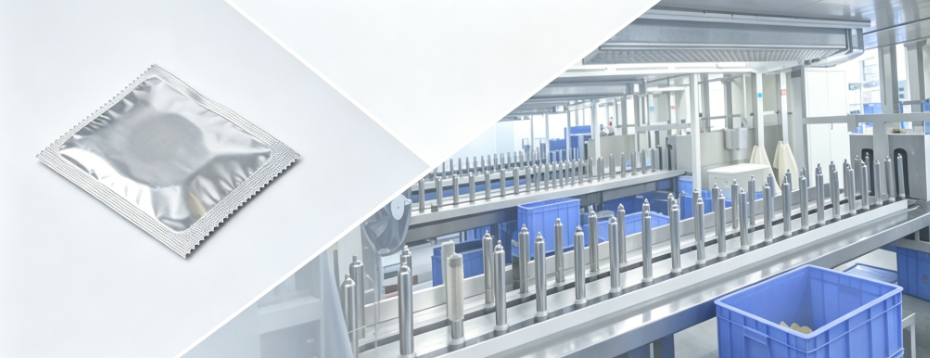
Demand a factory address and a live video tour. Ask them to walk you through the dipping line, the electronic testing machines, and the packaging area — on video, not photos. Genuine factories are happy to do this; traders usually stall.
Look for platform verification signals. On Made-in-China, check for "Audited Supplier" (Gold/Diamond Member) badges; on Alibaba, "Verified Supplier" / "Assessed Supplier." These are not guarantees, but they raise the bar.
Cross-check the legal entity. The certificate holder, the company on the contract, and the bank account holder must all be the same legal entity. Mismatches are a classic red flag.
Ask about capacity. How many production lines? What is monthly capacity (pieces)? A real latex condom plant runs continuous dipping lines; a trader cannot answer in production terms.
Step 3: Check Certifications and Regulatory Documents
This is the single most important filter. Do not negotiate price before the certificates pass this checklist.
| Certificate / Document | What it covers | When you need it |
|---|---|---|
| ISO 4074 | Natural rubber latex condoms — requirements and test methods (the global baseline) | Every market, effectively mandatory |
| ISO 23409 | Polyisoprene male condoms | If you source polyisoprene |
| ASTM D3492 | Rubber contraceptives standard specification | US market |
| FDA 510(k) | Premarket clearance for condoms as Class II devices (21 CFR 884.5300) | US market |
| CE marking (EU MDR) | EU market access as a medical device | EU/EEA markets |
| ISO 10993 | Biocompatibility testing | Part of most regulatory submissions |
| Free Sale Certificate (FSC) | Confirms the product is legally sold in the country of origin | Most non-US/EU markets (Africa, LATAM, Middle East, Southeast Asia) |
| WHO Prequalification (PQ) | Quality assurance for institutional procurement | NGO, UN, and public-health tenders |
How to check them properly:
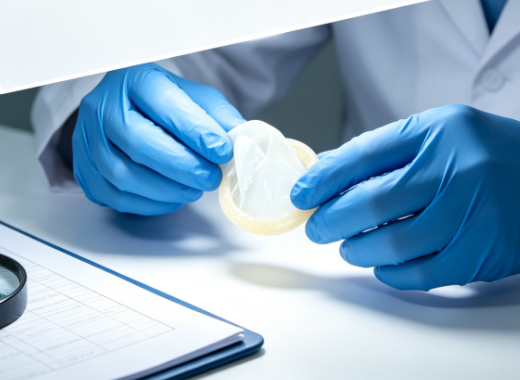
Ask for current, valid copies — not screenshots from the website. Check the holder name matches the entity you are contracting with.
Ask which recognized edition they test to (e.g., ISO 4074:2015, ASTM D3492-16). Outdated editions suggest neglected quality systems.
Ask whether they support your local registration — a strong factory's export team routinely helps clients with Ministry of Health (MOH) approvals, product registration files, and notarized documents. This support is worth as much as the certificate itself.
If you sell to institutions, ask if their products are WHO-prequalified or listed with international procurement agencies.
Note on US imports: condoms sold in the US must be covered by a cleared 510(k). The 510(k) holder can be the factory or the brand owner — clarify your role before you commit, because it changes your regulatory workload.
Step 4: Audit the Quality Control System
Certificates prove the factory can meet a standard. QC systems prove they consistently do. Ask specifically about:
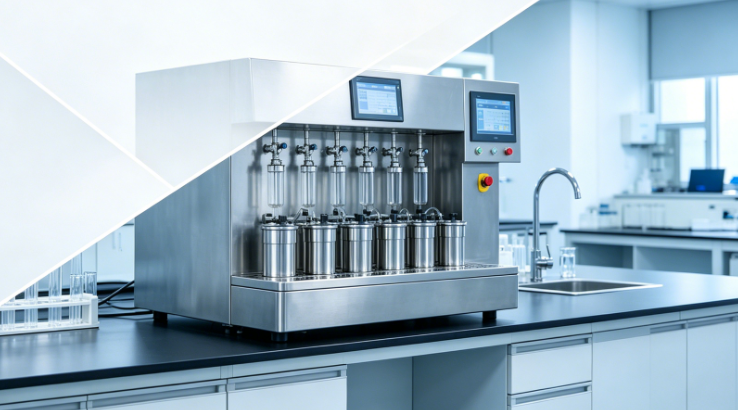
100% electronic testing. Industry-standard latex condoms are electronically tested (every single piece) for holes and defects. Ask how their line does it and whether you can see it on the video tour.
Destructive batch testing. Per ISO 4074 / ASTM D3492, batches are tested for air burst, water leak, freedom from holes, and dimensional accuracy. Ask for the last 3 batch test reports.
In-house laboratory. Does the factory have its own QC lab, or does it outsource everything?
Batch traceability. Every finished lot should trace back to raw-material lots (latex batch → production batch → final lot → shipping documents). Full traceability is what makes a recall manageable instead of fatal.
Third-party inspection. A reliable factory accepts pre-shipment inspection by SGS, Bureau Veritas, Intertek, or your own appointed inspector — and should pass it.
Typical specification benchmarks (use these to sanity-check what factories quote):
| Parameter | Typical range |
|---|---|
| Length | 180–192 mm |
| Width (flat) | 52 ± 2 mm |
| Thickness (latex) | ~0.06–0.09 mm |
| Thickness (polyurethane) | ~0.04–0.06 mm |
| Shelf life | 3–5 years |
| Packaging | 1 pc/foil or box, bulk carton |
Step 5: Compare MOQ, Pricing, and Total Cost of Ownership (TCO)
Price alone is the worst metric to compare. The real number is total cost of ownership:
TCO = unit price + freight + customs duties + inspection fees + rework/returns cost + your time
What realistic pricing looks like (indicative wholesale bands, verify current quotes — not a price list):
| Product type | Indicative FOB price (per piece) | Typical MOQ |
|---|---|---|
| Standard stock latex condom (no branding) | $0.01–0.06 | From ~100–10,000 pcs (platform listings vary) |
| OEM/private-label latex condom | $0.02–0.08 | 10,000–100,000 pcs |
| Ultra-thin / polyurethane / speciality | $0.10–0.30+ | 10,000+ pcs |
Volume discounts are real — a $0.05 unit at 100 pieces can drop to ~$0.03 at 20,000+ pieces. Ask for the volume ladder, not a single number.
MOQ is a negotiation point, not a fixed law. OEM/private-label MOQs commonly sit at 10,000–100,000 pieces, but many factories offer trial orders at lower volumes or stock-product MOQs as low as a single carton. If a factory refuses to discuss any flexibility, that tells you how they will treat you later.
Payment terms to expect (industry norms): 30% T/T deposit, balance against inspection report or B/L copy; L/C for larger orders; platform escrow (Alibaba Trade Assurance) for first orders. Be suspicious of anyone demanding full prepayment before producing a sample.
Step 6: Test Communication and Responsiveness
A factory's sales behavior is a preview of its operations:
Response time. Strong suppliers answer within hours (top-rated factories on B2B platforms respond in ≤2 hours). A week-long silence before the order will become a month-long silence after it.
Technical depth. Do they answer questions about ISO test methods, packaging compliance, and registration documents — or do they just reply "we have CE, send PO"?
Documentation habits. Do they proactively send specs, certificate PDFs, packaging options, and lead-time tables? Good factories over-document.
Samples. Genuine factories provide samples (usually paid for small quantities, with the cost deductible from your first order). Insisting on samples is normal practice — and normal factories expect you to ask.
Step 7: Order Samples and Run Pre-Shipment Inspection
Never skip validation, even with a promising factory:
Order samples first — both standard and custom-branded. Test them in your market for fit, performance, and packaging.
Confirm the sample matches the bulk. Ask the factory to keep a sealed sample of the approved lot and state in the contract that bulk goods must match it.
Book third-party inspection on the first bulk order (SGS, BV, Intertek, or your own QC). The factory accepting this is itself a quality signal.
Keep batch records for traceability and registration renewal.
Red Flags: 8 Warning Signs to Walk Away From
No verifiable factory address, or refusal to do a live video tour.
Certificates that can't be shown, are expired, or belong to a different company.
No QC data, no in-house lab, no recent third-party test reports.
Prices far below market with no technical explanation — quality is invisible until it fails, and "cheap" condoms fail publicly.
Refusal of third-party pre-shipment inspection.
No batch traceability (can't show lot records).
Vague answers on MOQ, lead time, and payment terms.
Unwilling to provide samples, or demanding full payment before any sample/production evidence.
Quick Decision Checklist
| Check item | Done? |
|---|---|
| Requirements defined (market, product, volume, packaging, timeline) | ☐ |
| Business license scope covers manufacturing | ☐ |
| Video tour of production line completed | ☐ |
| Certificate holder = contracting entity; certificates current | ☐ |
| ISO 4074 (or applicable standard) confirmed + edition checked | ☐ |
| Target-market documents available (510(k) / CE / FSC / WHO PQ as needed) | ☐ |
| Factory supports your local MOH registration | ☐ |
| Last 3 batch test reports reviewed | ☐ |
| Batch traceability system confirmed | ☐ |
| Third-party inspection accepted | ☐ |
| Volume price ladder + TCO calculated (not just unit price) | ☐ |
| Payment terms standard (e.g., 30% deposit T/T, balance vs docs) | ☐ |
| Samples ordered and tested in your market | ☐ |
| No red flags from the 8-point list | ☐ |
FAQ
Q1: What is the typical MOQ for OEM condoms from a Chinese factory?Typical OEM/private-label MOQs are 10,000–100,000 pieces per design. Many factories offer lower trial orders or stock products with much smaller MOQs (sometimes from a single carton). Always ask for the trial-order option.
Q2: How much does a wholesale condom cost from China?Indicative FOB prices range from about $0.01–0.06 per piece for standard stock latex, $0.02–0.08 for OEM/private label, and higher for ultra-thin, polyurethane, or speciality products. Compare TCO, not unit price.
Q3: Do I need an FDA 510(k) to import condoms into the US?Condoms are Class II medical devices (21 CFR 884.5300) and require a cleared 510(k) to be marketed in the US. The 510(k) can be held by the manufacturer or the brand owner — clarify who holds it before committing.
Q4: What is a Free Sale Certificate (FSC), and do I need one?An FSC confirms the product is legally sold in its country of origin. Most non-US/EU markets (Africa, Latin America, Middle East, Southeast Asia) require it as part of import registration. A capable factory issues it and helps with local MOH approvals.
Q5: Can a Chinese condom factory help with registration in my country?Many export-oriented factories routinely support clients with MOH approvals, product registration files, and notarized documents. This support should be discussed before you choose a partner — it is a real service differentiator.
Q6: Latex, polyisoprene, or polyurethane — which should I choose?Latex is the cost-effective mainstream (ISO 4074). Polyisoprene offers a latex-free feel with similar elasticity (ISO 23409). Polyurethane is the thinnest and most premium option (~0.04–0.06 mm), with the highest unit price. Choose based on your target market and positioning.
Final Step: Source Like a Buyer, Not a Visitor
Choosing a condom manufacturer in China is a decision you should be able to defend on paper: certificates verified, QC process audited, TCO calculated, samples tested, and inspection contracted. Follow this checklist and you will filter out the middlemen and the shortcuts before they can cost you a market.
Data notes: market size and growth figures are drawn from publicly reported industry research (Grand View Research, as cited in B2B sourcing platforms); the Karex price-increase figure from April 2026 company statements covered in trade press; certification requirements from FDA classification (21 CFR 884.5300) and ISO 4074 / ISO 23409 / ASTM D3492 public standards. Indicative price and MOQ bands are based on live B2B platform listings (Made-in-China, Alibaba) and vary with material, volume, and market conditions — always verify current quotes. Verify all regulatory details with your target market's competent authority before import.
Ready to compare serious factories?
Send us your spec sheet (target markets, product type, volume, packaging) and we will reply with a factory profile, certificate package, and a sample-order plan — no obligation.
📧 [email protected]| 🌐 www.beskomed.com | WhatsApp/WeChat:8615347868693


